Over-Ear vs In-Ear Headphones: Which Type Is Right For You?
Confused between over-ear headphones and in-ear earbuds? This guide explains the differences, advantages, and helps you choose the right type for your listening style.

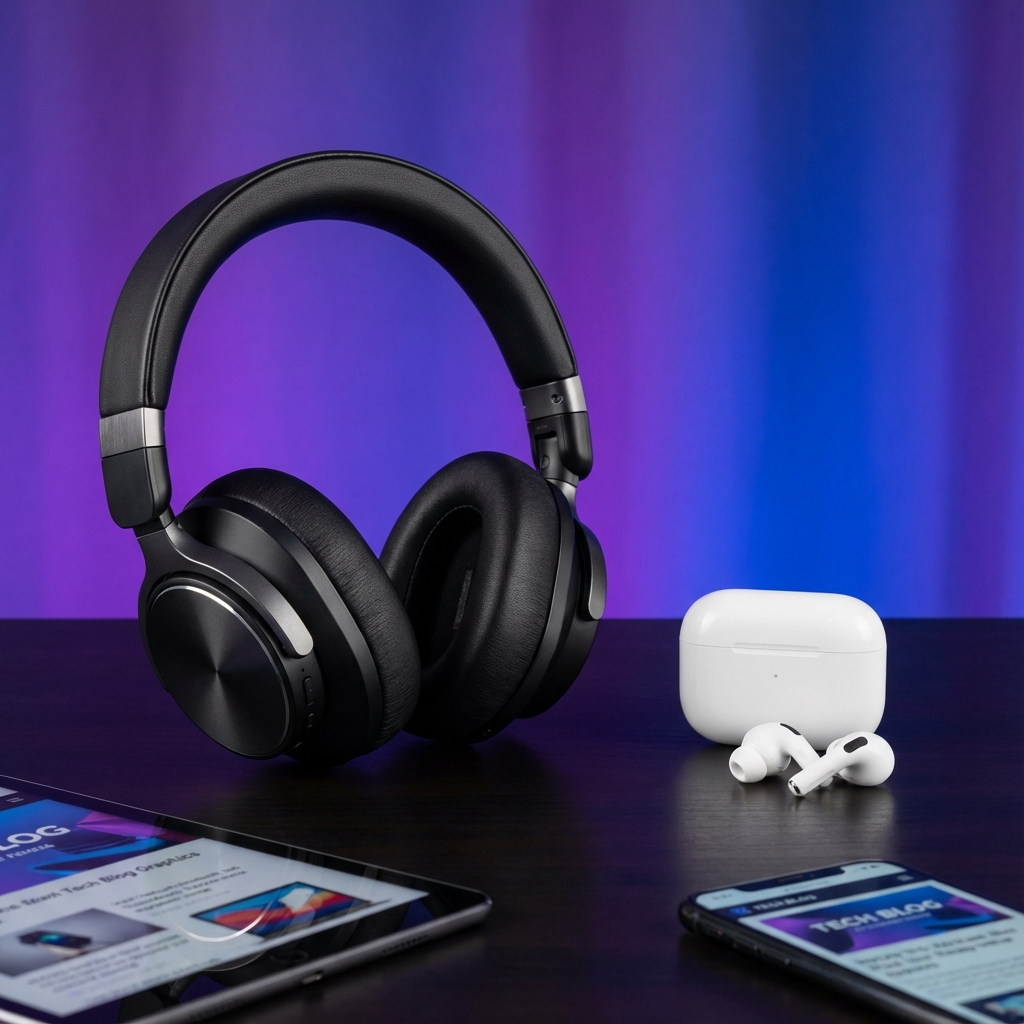
The headphone market offers two dominant form factors: over-ear headphones that envelop your ears and in-ear earbuds that sit inside your ear canal. Each has passionate advocates, and both have legitimate advantages. The right choice depends entirely on how, where, and why you listen.
This comprehensive guide breaks down every consideration to help you make the best choice for your listening lifestyle.
Understanding the Fundamental Differences
Before diving into specific advantages, let's establish what distinguishes these two formats.
Over-Ear Headphones Defined
Over-ear (circumaural) headphones feature large ear cups that completely surround your ears. The cushions rest against your head, not your ears, creating a seal around each ear. This design has been the standard for serious audio listening since the invention of personal headphones.
Key characteristics:
- Large drivers (40mm or larger typically)
- Weight distributed across headband
- Create seal around ears
- Significant physical presence
- Usually wired or wireless
In-Ear Earbuds Defined
In-ear monitors (IEMs) or earbuds sit inside your ear canal, sealed with silicone or foam tips. True wireless earbuds have become the most popular form, eliminating wires entirely and including a charging case.
Key characteristics:
- Small drivers (typically 6-12mm)
- Lightweight and highly portable
- Seal created by ear tips in canal
- Minimal physical presence
- Usually true wireless or wired
Sound Quality Comparison
The eternal debate: can small earbuds match large headphones for audio quality?
Physics Favors Over-Ear
Larger drivers can move more air, theoretically producing better bass response and more natural sound:
Over-ear advantages:
- Larger drivers produce deeper, more impactful bass without distortion
- More room for complex driver configurations
- Natural soundstage—sound feels like it comes from around you
- Easier for manufacturers to tune precisely
- Generally better for critical listening and audio production
Technology Is Closing the Gap
Modern in-ear earbuds have made remarkable advances:
Earbud improvements:
- Advanced driver technologies (planar magnetic, electrostatic)
- Multiple driver configurations in single earbuds
- Sophisticated DSP processing enhances sound
- Personalized tuning based on ear shape
- ANC technology reduces ambient noise for cleaner listening
The Honest Assessment
For most consumers listening to streaming audio, quality differences are minimal. Premium earbuds from Sony, Apple, and Samsung compete directly with mid-range headphones.
However, for audiophile listening, music production, or critical audio work, over-ear headphones still hold an advantage. The soundstage (spatial presentation of music) is particularly difficult for earbuds to replicate.
Comfort: The Long-Term Consideration
You'll wear these for hours. Comfort matters more than most people realize.
Over-Ear Comfort Factors
Advantages:
- Pressure distributed across headband and around ears
- No discomfort inside ear canal
- Can be worn with glasses (some more easily than others)
- No ear tip size concerns
- Ears can breathe with open-back designs
Disadvantages:
- Weight on head can cause fatigue during long sessions
- Ear cups can get hot after extended use
- Hair can be flattened (the "headphone hair" problem)
- Less secure during physical activity
- Pressure points on headband can become uncomfortable
Tips for over-ear comfort:
- Look for memory foam padding
- Consider headband weight distribution
- Open-back designs reduce heat
- Adjustable headbands accommodate head sizes
In-Ear Comfort Factors
Advantages:
- Extremely lightweight
- Unobtrusive and small
- Secure fit during movement
- No heat buildup around ears
- No hair disturbance
Disadvantages:
- Pressure inside ear canal can become uncomfortable
- Finding the right tip size is essential
- Some people find the in-ear feeling unpleasant
- Long-term wear can cause ear fatigue
- Sweat and moisture can affect fit
Tips for in-ear comfort:
- Try multiple tip sizes (comes with most earbuds)
- Consider foam tips for better fit and comfort
- Take breaks during extended listening
- Clean regularly for hygiene
Personal Anatomy Matters
Ear shapes vary significantly between individuals. Some people find in-ear devices uncomfortable regardless of tip selection, while others can wear them all day without issue. If possible, try before committing to an expensive purchase.
Noise Isolation and Active Noise Cancellation
Blocking outside sound enhances listening in noisy environments.
Passive Isolation
Over-ear headphones: Closed-back designs naturally block significant external noise through physical barriers. The seal around ears prevents sound from entering.
In-ear earbuds: Good seal in ear canal blocks substantial noise passively. Some in-ears offer superior passive isolation to even the best ANC headphones.
Active Noise Cancellation
Both form factors now offer ANC, but with different characteristics:
Over-ear ANC:
- More effective for low-frequency sounds (airplane engines, traffic)
- Larger housings accommodate better microphone arrays
- Generally stronger noise reduction ratings
- Sony WH-1000XM5 and Bose QuietComfort Ultra lead this category
In-ear ANC:
- Improved dramatically in recent years
- Combines with excellent passive isolation for impressive results
- AirPods Pro 3 and Sony WF-1000XM6 compete with over-ear options
- Smaller microphone arrays can limit performance in wind
Winner: Over-ear still has an edge for pure ANC performance, but premium earbuds have closed the gap significantly. The combination of in-ear passive isolation plus ANC is extremely effective.
Portability and Convenience
If you're always on the move, practical considerations matter.
Over-Ear Portability
Challenges:
- Bulky even when folded
- Requires bag or case for transport
- Conspicuous when wearing
- Not suitable for most physical activity
- May need to remove when entering stores or talking to people
Advantages:
- Can hang around neck when not in use
- No risk of losing individual pieces
- Battery lasts longer (larger capacity)
- Easy to put on and remove
In-Ear Portability
Advantages:
- Case fits in pocket easily
- Always with you
- Inconspicuous when wearing
- Suitable for running, gym, and active use
- Quick to insert and remove
- Easy to wear with hats, helmets
Challenges:
- Easy to lose individual buds
- Smaller batteries mean more frequent charging
- Case needs to travel with you
- Sweat can affect electronics
Clear winner: For portability, earbuds win decisively. This is their primary advantage for many users.
Use Case Scenarios
The best choice depends on your specific situations.
For Commuting
Recommendation: In-ear earbuds for most commuters.
- Pocketable case fits anywhere
- Secure fit on crowded transit
- Quick to put in and remove
- ANC handles subway and bus noise well
- Discreet appearance
Exceptions: Long flight or train journeys favor over-ear for superior comfort and ANC.
For the Office or Working From Home
Recommendation: Over-ear headphones for extended work sessions.
- Superior comfort for all-day wear
- Better microphones for calls (generally)
- Quick to remove for conversations
- Signals "do not disturb" to colleagues
- Better sound for music during work
For Exercise and Sports
Recommendation: In-ear earbuds, specifically designed for activity.
- Secure fit during movement
- Sweat and water resistance
- Lightweight, doesn't bounce
- No slipping during running
- Many have fitness tracking features
Over-ear headphones are generally unsuitable for exercise beyond light walking.
For Critical Listening and Music Production
Recommendation: Over-ear headphones for professional work.
- More accurate sound reproduction
- Better soundstage for mixing
- Industry standard in studios
- Closed-back for recording, open-back for mixing
- Flat frequency response for professional work
For Gaming
Recommendation: Over-ear headphones for immersive gaming.
- Better soundstage for positional audio
- More immersive experience
- Comfortable for long sessions
- Many have built-in microphones
- RGB lighting if you're into that
Exception: Mobile gaming on phones suits earbuds better.
For Casual Everyday Use
Recommendation: In-ear earbuds for versatility.
- Always available in your pocket
- Works for any quick listening session
- Suitable for calls and music alike
- Pairs easily with phone
- Modern earbuds handle all common uses well
Price and Value Comparison
How do costs compare across form factors?
Entry Level ($50-100)
Over-ear options: Can find decent closed-back wired options. ANC at this price will be basic.
Ear bud options: Surprisingly competitive. Brands like Soundcore and EarFun offer impressive value.
Value winner: Earbuds often provide more features at this tier.
Mid-Range ($100-200)
Over-ear options: Solid wired audiophile options or basic wireless ANC.
Earbud options: Premium true wireless options like Nothing Ear and Galaxy Buds FE tier.
Value winner: Both offer compelling options. Personal preference matters most.
Premium ($200-350)
Over-ear options: Excellent wireless ANC options from Sony, Bose, Apple.
Earbud options: Flagship true wireless (AirPods Pro, Sony WF-1000XM6).
Value winner: Similar performance levels for primary use cases.
Luxury ($350+)
Over-ear options: Best-in-class audiophile and professional options.
Earbud options: Limited ceiling—premium earbuds max out around $300-350.
Clear winner for audiophiles: Over-ear opens up true high-end audio options.
Durability and Longevity
How long will your investment last?
Over-Ear Durability
Advantages:
- Larger components are more robust
- Ear pads can be replaced on many models
- Headband often user-replaceable
- No tiny parts to lose
- Many last 5-10+ years with care
Vulnerabilities:
- Headband can snap (metal frames more durable)
- Ear pad materials can deteriorate
- Cables can fray (wired models)
- Hinges can loosen or break
In-Ear Durability
Advantages:
- Solid-state with few moving parts
- Cases protect during transport
- Water resistance common
Vulnerabilities:
- Small components are fragile
- Batteries degrade over 2-3 years
- Easy to lose individual buds
- Case battery also degrades
- Not user-serviceable
Longevity winner: Over-ear headphones, especially quality wired options, can last decades. Earbuds have a natural lifespan limited by battery degradation.
Environmental and Health Considerations
Some factors beyond sound quality matter:
Hearing Health
Volume awareness: Both can damage hearing at high volumes. In-ear might be riskier because users sometimes increase volume to overcome poor seal.
Ear canal health: In-ear devices can push earwax deeper and create conditions for infections if not kept clean.
Listening breaks: Over-ear allows air circulation. In-ear seals tightly, so periodic breaks help ear health.
Environmental Awareness
Safety concern: Blocking all sound can be dangerous in traffic, public spaces, or when situational awareness matters.
Transparency modes: Both form factors now offer passthrough audio, allowing environmental sounds when needed.
Making Your Final Decision
Choose Over-Ear If:
- Extended listening sessions are common
- Sound quality is paramount
- You primarily listen at home or office
- Gaming is a primary use case
- You prefer avoiding ear canal insertion
- You want equipment that lasts many years
Choose In-Ear If:
- Portability is essential
- You exercise or move actively while listening
- You want something always in your pocket
- You frequently switch between listening and conversations
- You prefer a discreet appearance
- Versatility across all situations matters most
Consider Both
Many audio enthusiasts own both form factors for different situations:
- Over-ear for home, office, and focused listening
- Earbuds for commuting, exercise, and daily portability
Quality options in each category start around $100-150, making a two-device approach increasingly accessible.
Conclusion
Neither form factor is universally better—they serve different needs. The listening habits and environments that define your daily life should drive your choice.
If you're torn, consider where you'll actually use your headphones or earbuds most often. That primary use case should determine your investment. You can always add the other form factor later as a secondary option.
The good news is that both categories have matured to the point where excellent options exist at every price point. Whether you prefer the immersive experience of over-ear headphones or the convenience of true wireless earbuds, you can find a product that delivers.
Questions about choosing between headphones and earbuds? Reach out through our contact page—I'm happy to help with personalized recommendations!