Tech Trends Shaping 2026: What to Expect This Year
From AI advancements to new device categories, here are the technology trends that will define 2026 and impact how we work, play, and live.

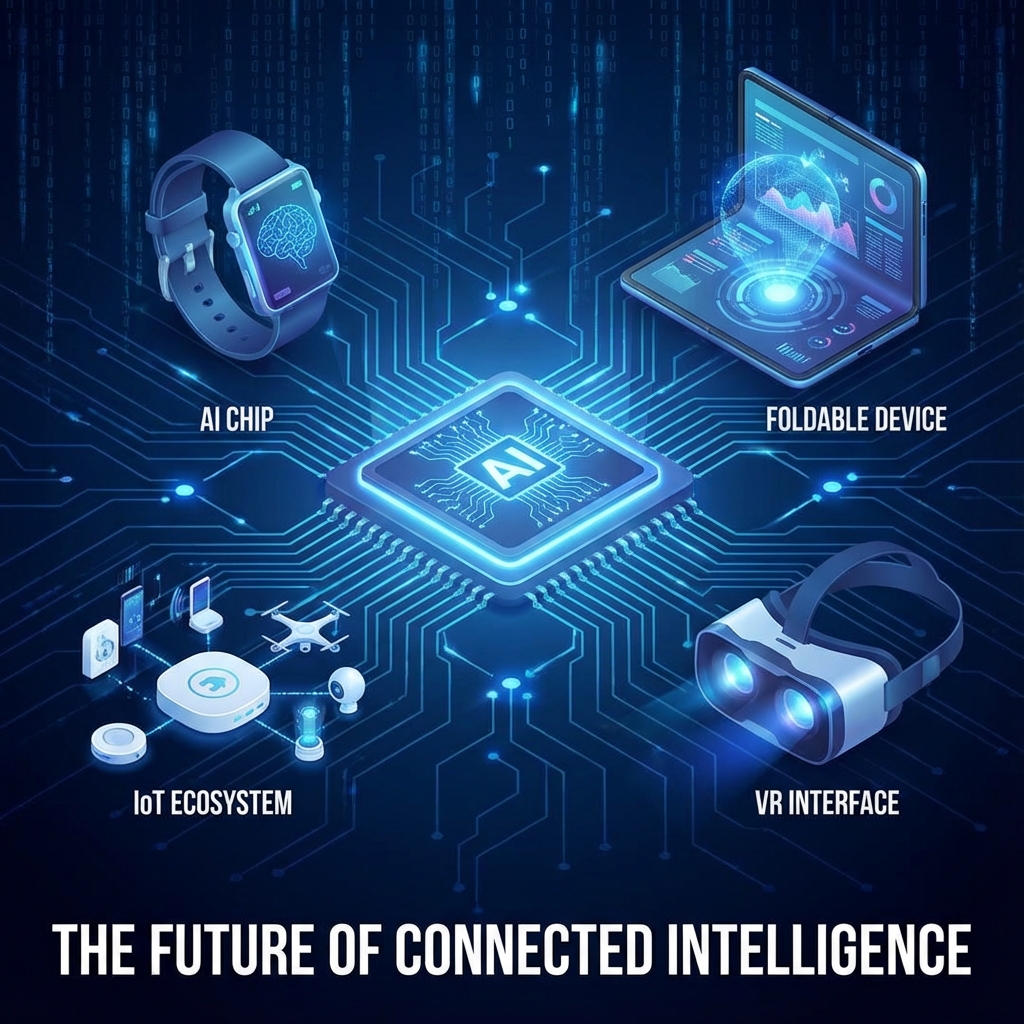
Every year brings technological advancements that reshape our daily lives. As we enter 2026, several emerging trends are poised to move from experimental curiosity to mainstream adoption. Understanding these trends helps you make smarter purchasing decisions and prepares you for the changes ahead.
Here are the technology trends that will define the year ahead.
Artificial Intelligence Goes Mainstream
AI was the buzzword of recent years, but 2026 is when it becomes genuinely useful for everyday users.
AI in Every Device
The integration of AI into consumer devices is accelerating beyond smartphones:
Smartphones now feature AI-powered photo editing, real-time translation, and intelligent assistants that actually understand context. The gap between taking a photo and having a professionally-edited result has essentially disappeared.
Laptops are incorporating Neural Processing Units (NPUs) that enable on-device AI without cloud dependencies. This means faster processing, better privacy, and AI assistance even offline.
Smart home devices have become genuinely intelligent. AI-powered thermostats learn your patterns automatically. Security cameras distinguish between actual threats and harmless activity. Voice assistants understand multi-step commands and maintain conversation context.
Practical AI Applications
Beyond the hype, AI is solving real problems:
Writing assistance has evolved from grammar checking to genuine collaboration. AI can help draft emails, summarize long documents, and adapt writing to different tones and audiences—all while learning your personal style.
Creative tools powered by AI have democratized design and content creation. Professional-quality graphics, video editing suggestions, and music composition are now accessible to anyone, not just trained professionals.
Health monitoring through AI analysis of wearable data is catching potential issues before they become serious. Pattern recognition in heart rate, sleep, and activity data provides insights that might take humans months to notice.
The Privacy Balance
With AI processing so much personal data, privacy becomes critical:
On-device processing is growing as manufacturers recognize privacy concerns. Apple, Google, and Samsung are all pushing more AI computation onto the device itself rather than the cloud.
Transparency initiatives are emerging, with some companies explaining what data AI uses and how decisions are made.
User control is improving, with more granular settings for what AI features can access and learn from.
Sustainable Technology Becomes Standard
Environmental consciousness is reshaping how technology is designed, manufactured, and sold.
Right to Repair Progress
After years of advocacy, repairable technology is gaining traction:
Modular smartphones from Fairphone and others are demonstrating that upgradeable, repairable phones are viable. Mainstream manufacturers are exploring similar approaches under regulatory pressure.
Self-repair programs from Apple, Samsung, and others now provide official parts and guides for common repairs. This was unthinkable just a few years ago.
Legislation is spreading: The European Union's right to repair directives are influencing global product design, as manufacturers create single designs for worldwide markets.
Sustainable Materials
How devices are made is changing:
Recycled materials are increasingly standard in new devices. Aluminum, plastics, and rare earth elements from old electronics are finding new life in new products.
Reduced packaging continues to evolve, with many manufacturers eliminating charging bricks from boxes and using recycled materials for packaging.
Extended product life through longer software support ensures devices remain useful longer, reducing electronic waste.
Energy Efficiency
Power consumption is getting serious attention:
Chip efficiency improvements mean flagship performance at lower power draw. The M-series chips from Apple and competitive offerings from Qualcomm and Intel prioritize performance-per-watt.
Display technology advances like LTPO allow screens to adapt refresh rates and power consumption to content, significantly extending battery life.
Standby and idle optimization in devices from TVs to routers reduces always-on power waste without sacrificing instant-on convenience.
Wearable Technology Evolution
Wearables are moving beyond fitness tracking into genuine health monitoring.
Health Monitoring Advances
New sensors are enabling medical-grade monitoring:
Continuous glucose monitoring without needles is approaching consumer availability. This could revolutionize diabetes management and general health awareness.
Blood pressure tracking from smartwatches is improving in accuracy, though medical-grade reliability remains challenging.
Advanced sleep analysis now includes detection of sleep apnea symptoms, oxygen levels, and sleep quality metrics that were previously only available in clinical settings.
Stress and mental health monitoring through heart rate variability and other markers is providing early warning signs of burnout and anxiety.
New Form Factors
Wearables are diversifying beyond watches:
Smart rings offer fitness tracking and health monitoring in a more subtle package. The ring form factor appeals to those who don't want a smartwatch's appearance.
Smart glasses continue development, with improved designs that look more like regular eyewear. Meta's Ray-Ban partnership and Apple's rumored offerings suggest this category is maturing.
Hearables (smart earbuds) are adding health features like heart rate monitoring during workouts and temperature sensing.
Integration Improvements
How wearables work with other devices is advancing:
Ecosystem connectivity means wearable data flows seamlessly to phones, tablets, and even healthcare providers where permitted.
Cross-platform compatibility is slowly improving, though ecosystem lock-in remains a significant factor in purchasing decisions.
Third-party integration allows fitness apps, health services, and insurance programs to access wearable data with user permission.
Display Technology Transforms
How we view content is undergoing significant changes.
Foldable Maturity
Foldable devices are becoming practical:
Durability improvements mean foldable phones can now withstand years of regular use. Early concerns about hinge failure and screen damage are being addressed through better materials and engineering.
Price normalization is bringing foldables closer to flagship prices. What was once a $2,000 novelty is approaching $1,000 territory.
App optimization means more software takes advantage of the unique form factor, offering genuine productivity and entertainment benefits.
New form factors beyond phone-to-tablet are emerging, including rollable displays and multi-fold configurations for specific use cases.
High-Refresh-Rate Everything
Smooth displays are no longer premium-exclusive:
120Hz is standard on mid-range phones and becoming common on laptops and tablets.
240Hz and beyond appears on gaming monitors and even some phones targeting competitive gamers.
Variable refresh rate technology adapts to content, delivering smoothness when needed while saving battery during static displays.
Enhanced HDR and Brightness
Display quality continues improving:
Peak brightness is reaching 2,500+ nits on smartphones, making outdoor visibility excellent.
HDR standards are consolidating, with Dolby Vision and HDR10+ widely supported.
Color accuracy out of the box is improving, reducing the need for calibration even for professional work.
Connectivity Evolution
How devices communicate is advancing rapidly.
Wi-Fi 7 Deployment
The next generation of Wi-Fi is arriving:
Speed improvements deliver multi-gigabit connections, exceeding wired options for many users.
Lower latency benefits gaming, video calls, and AR/VR applications.
Better congestion handling means more reliable connections even with many devices.
Challenges remain: Most users' internet plans can't saturate Wi-Fi 6, making Wi-Fi 7's benefits theoretical for now.
5G Expansion
5G is finally becoming broadly useful:
Coverage expansion means 5G is available in most urban and suburban areas.
Mid-band 5G provides the balance of speed and coverage that makes 5G practical for mobile use.
Fixed wireless 5G is becoming a legitimate home internet option in underserved areas.
Satellite Connectivity
Beyond Cellular: Satellite connections are reaching consumer devices:
Emergency connectivity via satellite in smartphones (pioneered by Apple, following by others) provides safety in areas without cell coverage.
Satellite internet services like Starlink continue expanding, offering high-speed internet in previously unreachable locations.
Aviation and marine applications finally bring reliable connectivity to planes and ships.
The Subscription Economy Matures
How we pay for technology continues evolving.
Hardware-as-a-Service
Buying devices outright is becoming optional:
Smartphone subscriptions from carriers and manufacturers bundle device, service, and insurance into predictable monthly costs with regular upgrades.
PC subscriptions for businesses and increasingly consumers offer always-current hardware without large upfront costs.
Gaming hardware subscriptions provide access to current-gen consoles and games for monthly fees.
Software Subscriptions Backlash
Not all subscription trends are positive:
Subscription fatigue is real, with consumers pushing back against every product requiring ongoing payments.
Lifetime purchase options are making comebacks as alternatives to subscriptions, especially from smaller developers.
Bundling is emerging as services combine to provide better value (think streaming bundles approaching cable packages).
Privacy and Security Focus
Protection of personal data is becoming a product feature.
Hardware-Level Security
Security is being built into chips:
Secure enclaves isolate sensitive data from the main processor, protecting passwords, biometrics, and encryption keys.
Hardware key support through passkeys and physical security keys is replacing traditional passwords.
On-device processing for AI and other features keeps sensitive data local rather than uploading to servers.
Default Privacy Settings
Out-of-box privacy is improving:
Opt-in tracking is becoming standard rather than opt-out.
Privacy dashboards show what data apps and services are accessing.
Data minimization principles mean companies are collecting less data in the first place.
What This Means for Consumers
These trends have practical implications for purchasing decisions:
When to Buy
AI-ready devices: If your current phone or laptop is several years old, newer hardware with AI capabilities offers significant improvements.
Wearables: Health monitoring features have matured enough that current-generation smartwatches offer genuine value beyond fitness tracking.
Foldables: Now worth considering for early majority adopters, not just enthusiasts.
Connectivity: Wi-Fi 7 and advanced 5G are nice-to-have, not need-to-have for most users.
When to Wait
AR glasses: Still early. Wait for more comfortable, capable, and socially acceptable designs.
Revolutionary AI: Current AI is useful but not transformative for most users. Wait for clear use cases that apply to your life.
Unproven form factors: New device categories often take several generations to mature.
Smart Strategies
Buy for current needs: Don't pay premiums for features you won't use today.
Consider longevity: Choose devices with long software support commitments.
Value sustainability: Repairable, recyclable devices may cost more now but provide better long-term value.
Conclusion
Technology in 2026 is characterized by maturation rather than revolution. AI is becoming practically useful, wearables are becoming medically relevant, displays are becoming universally excellent, and connectivity is becoming ubiquitous.
The most significant shift may be attitudinal: technology is increasingly evaluated on sustainability, privacy, and longevity rather than raw specifications alone. This benefits consumers through longer-lasting, more thoughtfully designed products.
Whether you're planning major purchases or simply staying informed, understanding these trends helps you make decisions aligned with where technology is heading.
Have questions about these trends or how they affect your purchasing decisions? Reach out through our contact page!